
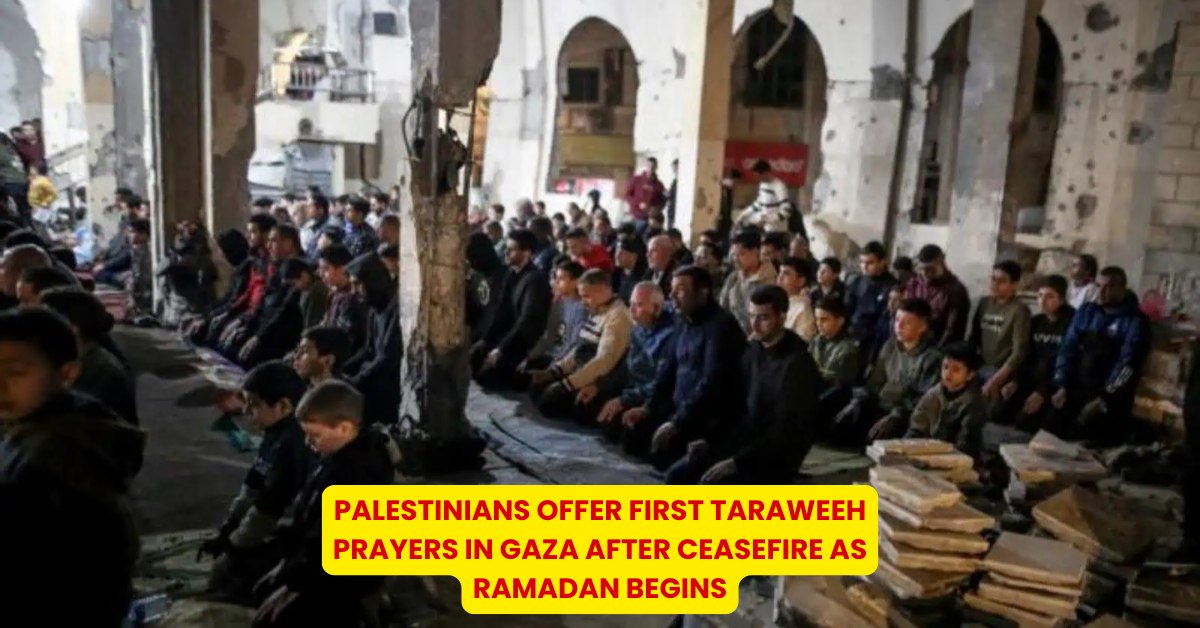
Palestinians across the Gaza Strip gathered for the first Taraweeh prayers of Ramadan under a ceasefire, marking a significant spiritual moment after months of conflict and instability. The prayers, held on the opening night of the holy month, were the first to take place since a relative halt in large-scale fighting, bringing cautious relief and renewed faith to residents.
Worshippers assembled in damaged mosques, open courtyards, and makeshift prayer areas constructed from tents and temporary structures. With many mosques destroyed or heavily damaged during recent hostilities, communities organized prayer spaces using simple materials such as nylon sheets and wooden frames, allowing residents to continue religious observances despite ongoing hardship.
The beginning of Ramadan was confirmed after the sighting of the crescent moon, with February 18 marking the first day of fasting for many Palestinians. For residents of Gaza, this year’s Ramadan is the first in more than two years to be observed under a relative calm following a ceasefire that paused large-scale military operations. However, humanitarian challenges remain severe, with widespread destruction, shortages of essential supplies, and large-scale displacement continuing to affect daily life across the enclave.
At several locations, including historic mosques that suffered structural damage during the conflict, limited repairs enabled partial use of prayer halls. Worshippers also gathered on the ruins of destroyed religious sites, offering prayers for peace, stability, and an end to ongoing suffering. Despite the fragile calm, the presence of surveillance aircraft overhead and the memory of recent hostilities underscored the uncertain environment in which the holy month has begun.
Many families in Gaza continue to live in temporary shelters after being displaced during the conflict. With essential infrastructure damaged and resources limited, residents are observing Ramadan under challenging conditions. Still, the commencement of Taraweeh prayers has been described by local communities as a symbol of resilience and continuity, as worshippers seek spiritual strength and hope during the sacred month.
In Jerusalem, thousands of Palestinians also gathered for the first Taraweeh prayers at the Al-Aqsa Mosque compound, despite heightened security measures and restrictions. The beginning of Ramadan across Palestinian territories has brought both a sense of spiritual renewal and ongoing concern about the fragile security situation and humanitarian needs.
The continuation of the ceasefire and the humanitarian response in the coming weeks will play a crucial role in determining how the holy month unfolds for Gaza’s residents, many of whom are striving to balance faith and daily survival amid the aftermath of conflict.