

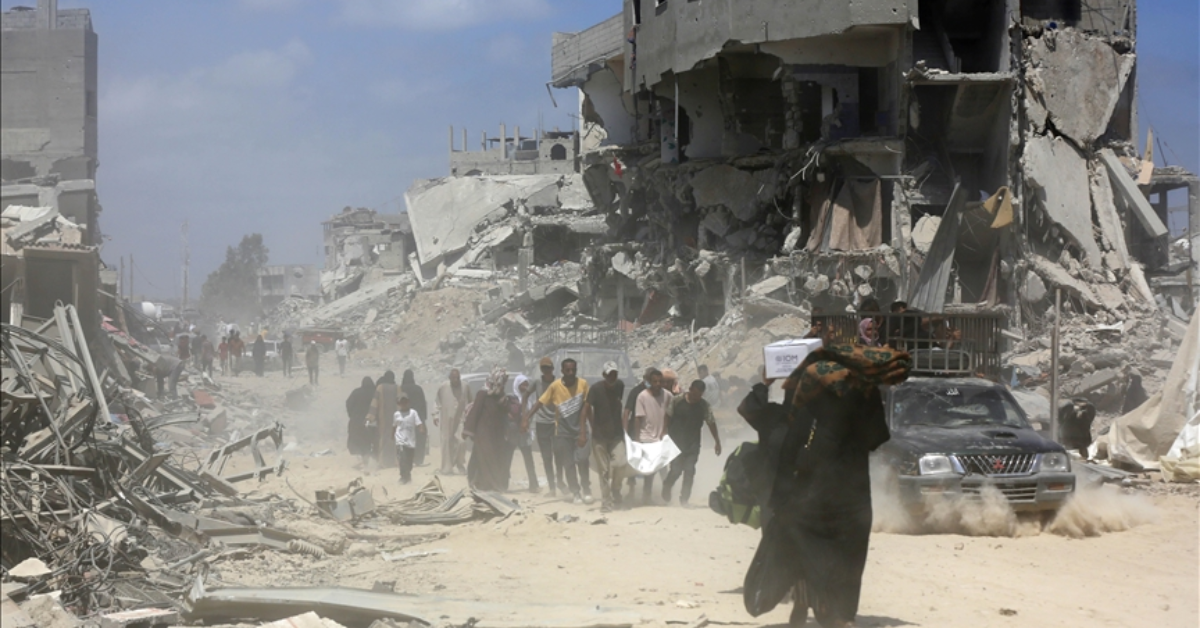
Gaza City — Fear erupted across Gaza City today after the Israeli military airdropped leaflets ordering residents to evacuate immediately. The message urged civilians to leave their homes and head south toward Al-Mawasi, a coastal area designated as a “humanitarian zone,” warning that a major offensive is coming.
Streets filled with crowds carrying what little they could salvage. Among them were vulnerable groups—cancer patients, the elderly, people injured in earlier strikes—who now found themselves caught in an impossible choice: stay in a city under bombardment or flee to places where safety is uncertain and life means starting over.
The scale of the evacuation order is immense. Gaza City, once home to nearly one million people before the conflict ravaged its infrastructure, has been battered by relentless bombings and blockades. Many residents say there’s nowhere safe to go south, especially as the southern zones are already overcrowded with displaced people.
Humanitarian workers and families alike expressed dread: hospitals were told to evacuate, but those held within said they could not abandon patients. Others said they had no means to leave—transport was scarce, the roads damaged, and trust shattered after repeated displacement.
Amid the announcements, a recurring despair: evacuees fear this exodus may not be temporary. There is widespread concern that once people leave Gaza City, they may never be allowed to return. The memories of earlier conflicts, of being forced from homes and unable to go back, haunted many.
As dusk fell, the city’s skyline—already scarred by destruction—grew darker with the knowledge that a new chapter of the conflict may be about to begin. Those fleeing carried grief, uncertainty, and the weight of abandoning what remains of their lives, while those staying braced for what’s to come.